Pregnancy transforms the body in ways that make everyday furniture suddenly uncomfortable. An office chair that worked fine before pregnancy often feels inadequate during those nine months, and potentially beyond if you’re nursing or dealing with postpartum recovery. A pregnancy office chair isn’t a luxury: it’s a practical investment in managing pain, maintaining focus, and protecting your long-term spinal health. Whether you’re working from home or commuting to an office, the right chair can mean the difference between ending your workday sore and stiff versus finishing energized. This guide walks you through what to look for, which styles work best, and how to set yourself up for maximum comfort during pregnancy and beyond.
Table of Contents
ToggleKey Takeaways
- The best office chair for pregnancy prioritizes full adjustability in seat height, lumbar depth, armrest position, and backrest recline to accommodate your body’s shifting needs.
- Lumbar support is critical during pregnancy—look for adjustable, firm support that moves independently up or down to match your unique spinal curve and reduce lower back strain.
- A wider seat pan with a waterfall edge (curved front) and breathable materials like mesh or memory foam prevent thigh pressure and heat buildup during long work shifts.
- Proper ergonomic setup—feet flat at 90-degree knees, monitor at eye level, and moving every 30 minutes—amplifies the benefits of your pregnancy office chair.
- Executive, mesh ergonomic, and mid-back chairs all work for pregnant workers; choose based on your work duration, heat sensitivity, and workplace setting rather than brand names.
Why Pregnancy-Friendly Office Chairs Matter
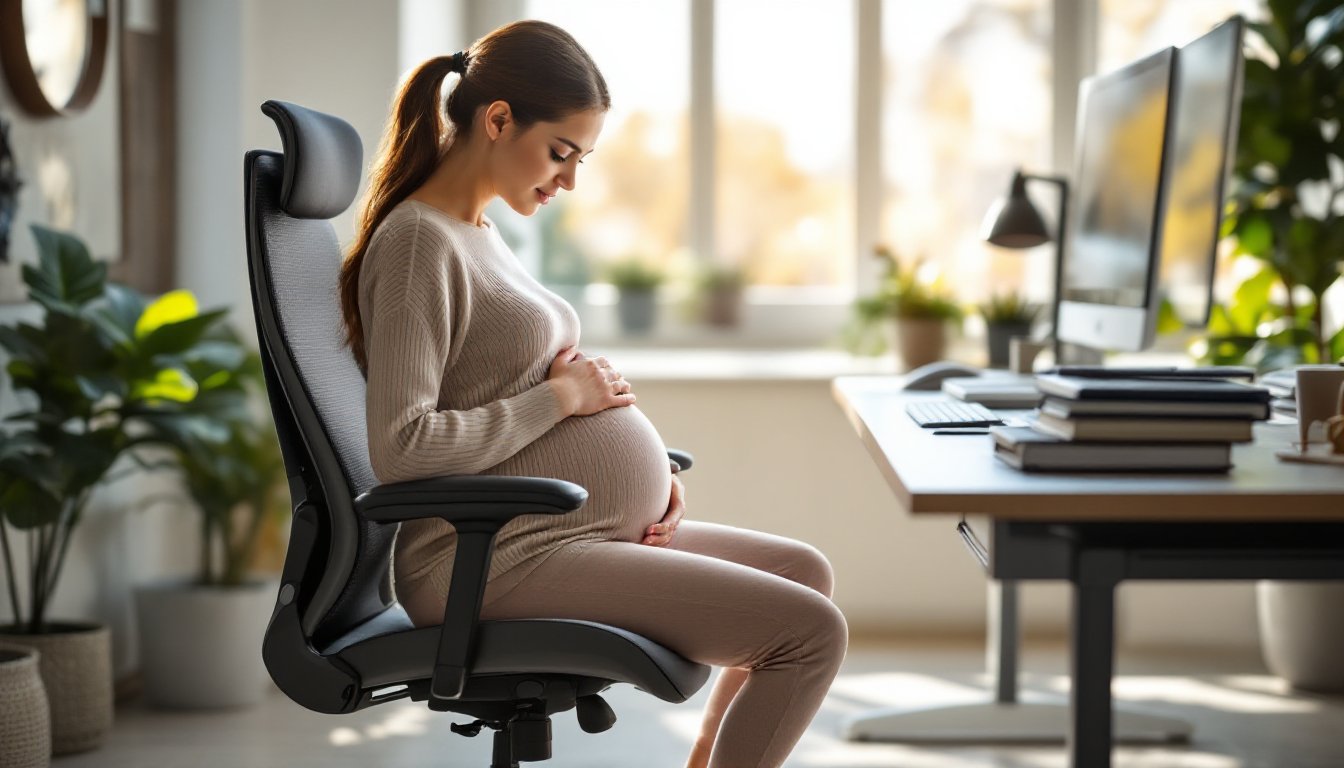
Pregnancy shifts your center of gravity and adds weight concentrated in your abdomen, placing extra stress on your lower back, hips, and neck. Sitting for 8+ hours a day in a standard office chair can trigger or worsen sciatica, lower back pain, and pelvic discomfort, issues many pregnant workers already battle. A chair designed for or adjusted for pregnancy supports the natural curve of your spine, reduces pressure on your tailbone and hips, and allows you to shift positions without pain. Beyond comfort, proper spinal alignment during pregnancy helps prevent postural habits that can linger after birth, reducing chronic back issues down the line. Investing in the right chair also protects your focus and productivity: when you’re not wincing every time you move, you can actually concentrate on your work.
Key Features to Look For in a Pregnancy Office Chair
The best pregnancy office chairs share a handful of non-negotiable features. Look for full adjustability: seat height, armrest height and width, backrest recline, and lumbar depth should all be independently tunable. A chair that feels locked in one position will exhaust you by midday. The seat pan should be slightly wider than a standard office chair and have a waterfall edge (curved front) that doesn’t dig into your thighs when swollen. Material matters too, breathable mesh or memory foam (not cheap vinyl) prevents heat and moisture buildup during long shifts. Finally, check the weight capacity and base stability: your body is heavier now, and wobbling adds to discomfort and anxiety.
Lumbar Support and Adjustability
Lumbar support is the anchor of any pregnancy office chair. Your lower back bears the brunt of pregnancy weight, so a firm, adjustable lumbar region is essential. The best chairs let you move the lumbar support up or down (to match your unique spinal curve) and in or out (depth adjustment), so it’s not just one-size-fits-all foam. An S-curve or ergonomic backrest, one that mirrors the natural spine, beats a flat back every time. Reclining slightly (10–15 degrees) takes pressure off your tailbone without making you feel like you’re lounging. Avoid chairs that recline too far or lock upright: pregnant bodies need to shift and adjust throughout the day.
Seat Cushioning and Materials
The seat itself should feel supportive but not rock-hard. Memory foam or high-density polyurethane foam (at least 3–4 inches thick) provides cushioning that conforms to your changing body without flattening out after a few months. Cheap padding compresses fast and stops supporting you when you need it most. Breathable materials like mesh or breathable fabric prevent the heat and moisture problems that come with sweating in pregnancy. If you run hot, pure mesh seats are superior to vinyl or pleather. The waterfall edge, a curved, tapered front that doesn’t cut across your thighs, is critical for pregnant workers: it reduces pressure on your legs and helps circulation when your feet swell.
Top Chair Styles for Pregnant Workers
Several chair categories work well for pregnancy. Executive or task chairs with high backs and deep cushioning offer maximum lumbar support and a professional look in office settings. Brands often include generous adjustability and premium padding, good if your workplace covers or subsidizes chairs. Mesh ergonomic chairs balance breathability and support, ideal if you’re sensitive to heat. They typically cost less than executive models and look sleek in a home office. Mid-back models work fine if you’re only sitting for 4–6 hours at a time: full-back chairs are better for longer shifts. Ball chairs (stability balls mounted on a wheeled base) engage your core and encourage movement, which some pregnant workers love, but they’re unstable if you’re off-balance, so test-drive one first. Rocking chairs or gliders work beautifully in home offices if you can rock slightly to relieve pressure. Recent office chair reviews highlight models with strong lumbar and seat adjustability, and some pregnancy-specific chair recommendations emphasize memory foam and width.
Ergonomic Setup Tips for Maximum Comfort
The perfect chair loses power if it’s set up wrong. Seat height should position your feet flat on the floor with knees at a 90-degree angle: your thighs should be parallel to the floor. Armrests should be at elbow height when your arms are relaxed at your sides, too high stresses your shoulders: too low forces you to hunch. Your monitor should be at eye level about an arm’s length away, so you’re not craning down at your bump or straining up. Keyboard and mouse belong close to your body: reaching stresses your shoulders and neck. Use a pregnancy pillow or lumbar roll if your chair’s built-in support isn’t quite right: a small rolled towel at your lumbar curve can make a huge difference for $5. Keep your feet elevated on a rest if swelling kicks in, yes, a simple footstool under your desk helps circulation and reduces swelling in your calves and ankles. Move every 30 minutes, even if it’s just standing and walking to the water cooler. Pregnancy-specific chairs can support good posture, but no chair replaces movement. Consider a desk converter to alternate between sitting and standing: standing for 15–20 minutes every couple of hours takes pressure off your hips and lower back.
Conclusion
A pregnancy office chair is an investment in your comfort, health, and work performance. Prioritize adjustability, lumbar support, wider seat pans, and breathable materials over brand names or flashy aesthetics. Set your chair up correctly and move regularly, these two habits together do more for your comfort than the fanciest chair alone. Your pregnant body isn’t temporary, and neither is the risk of chronic pain from poor posture. Choose well, adjust often, and give yourself permission to prioritize your comfort during this demanding season.