Setting up a home office in a tight space doesn’t mean sacrificing productivity or comfort. Whether you’re working from a corner of the bedroom, a nook under the stairs, or a compact spare room, a well-planned small home office can feel just as professional and inspiring as a sprawling dedicated workspace. The key is smart design choices: strategic furniture selection, efficient storage solutions, and proper lighting all transform cramped quarters into a focused, functional area where you can actually get work done. This guide walks through seven practical ideas for building a small modern home office setup that works for your space and your workflow.
Table of Contents
ToggleKey Takeaways
- Assess your space strategically by prioritizing natural light, avoiding high-traffic areas, and checking electrical outlet placement to create a functional small home office setup.
- Multi-functional furniture like wall-mounted desks, floating shelves, and storage ottomans maximize floor space and keep small home office ideas practical without sacrificing functionality.
- Vertical storage solutions—floating shelves, pegboards, and under-desk cable trays—eliminate visual clutter and make tight workspaces feel larger and less distracting.
- Proper lighting with dimmable task lamps and warm-white LEDs prevents eye strain and improves productivity in a confined workspace.
- Ergonomic fundamentals like an adjustable office chair, monitor at eye level, and supportive accessories prevent discomfort and maintain focus during long work sessions.
Assess Your Space and Choose the Right Location
Before buying a single piece of furniture, measure your actual square footage and identify the best corner or zone for your office. Not every spot in a small home works equally well.
Look for natural light first, placing your desk near a window reduces eye strain and boosts mood (bonus: you’ll save on lamp electricity during daytime hours). Avoid high-traffic areas where family members or roommates constantly pass through: that foot traffic becomes a distraction factory. If a window location puts you directly in a family walking path, consider a partially enclosed nook, closet, or corner with a room divider instead.
Also assess electrical outlet placement. You’ll need power for a desk lamp, monitor, and possibly a charger or external hard drive. Running extension cords across walkways is a tripping hazard: if outlets are sparse, invest in a power strip with surge protection and tuck it behind or under the desk.
Think about noise too. A basement corner might feel private but trap cold air and mechanical sounds. An upstairs bedroom gets less foot traffic but may pick up hallway conversations. Many people find success with small space living ideas and apartment decor tips that show how to carve private zones in shared homes using furniture placement and subtle design strategies.
Invest in Multi-Functional Furniture
In small home office design ideas, the furniture you choose determines whether the space feels cramped or intentional. Multi-functional pieces do double duty, shrinking the overall footprint while keeping functionality intact.
A desk that sits flush against a wall (rather than floating in the center of the room) immediately frees up floor area. Similarly, an ottoman or storage bench can serve as a footrest, extra seating for a video call, or a place to stash supplies and papers. Some homeowners pair a narrow desk with a tall shelving unit above it, stacking storage vertically so drawers and cabinets don’t consume precious square footage.
Consider nesting tables, stackable stools, or a console desk that doubles as a side table when you’re not working. These pieces collapse or tuck away cleanly when not in use. Wall-mounted shelves, floating desks, and fold-down work surfaces are game-changers in tight layouts.
Compact Desks and Wall-Mounted Options
A wall-mounted desk (32–48 inches wide) provides a legitimate work surface without the bulk of a traditional desk. Most attach to studs in the wall and can support a monitor, keyboard, and mouse easily. When not in use, the surface drops or folds away, reclaiming floor space entirely.
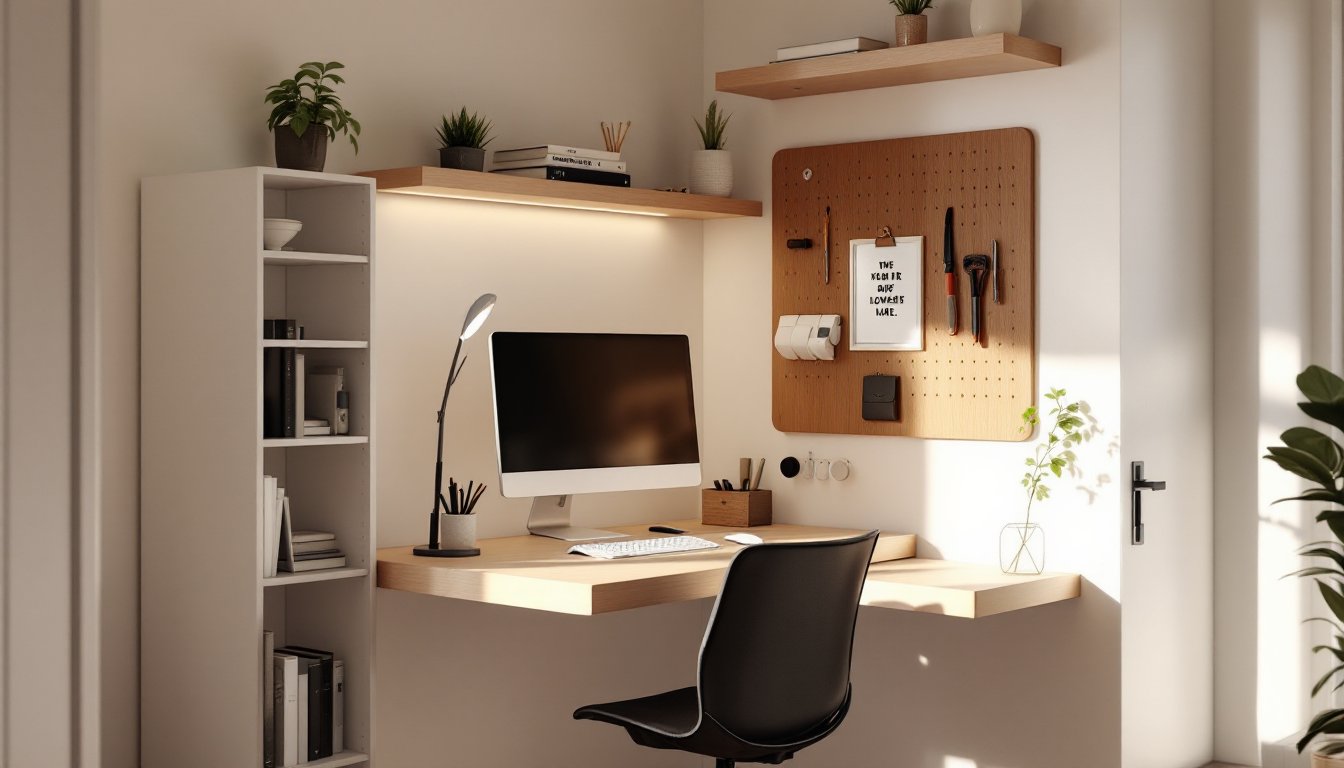
Alternatively, a floating desk mounted on a cleated frame gives a modern home office interior design feel and works well in corners. Standard desk height is 29–30 inches, which pairs comfortably with most office chairs. If you’re using a bar stool or perching on a bench, bump the height to 36 inches instead.
If wall mounting isn’t an option, a narrow pedestal desk (30–36 inches wide, 18–20 inches deep) or a L-shaped compact desk tucks into a corner and provides ample surface without sprawling. Look for desks with built-in shelves or drawers underneath, this hidden storage keeps clutter off the floor. Many IKEA modifications and creative hacks showcase how to customize small desks with add-on shelving or cable management systems at budget-friendly price points.
Optimize Storage Solutions
Open floor space makes a room feel larger, so prioritize smart storage that keeps papers, supplies, and equipment off the desk surface. Clutter triggers distraction, and in a small office, that distraction compounds quickly.
Use drawer organizers, file boxes, or desktop caddy systems to corral pens, sticky notes, chargers, and cables. A label maker (basic models cost $15–25) saves time finding items later and enforces a “everything has a home” discipline. Don’t underestimate the power of a small step stool with built-in storage underneath, it hides supplies and provides a footrest without eating floor space.
For papers and documents, install a wall-mounted file holder or lean a magazine rack against the wall beside your desk. These vertical storage solutions are compact and keep active projects visible without piling them on the work surface.
Vertical Storage and Hidden Organization
In small home office renovation ideas, walls are your best friend. Install floating shelves at eye level or above to hold books, plants, and decorative items. Shelves mounted high (60+ inches from the floor) don’t interfere with desk space or sightlines and visually lighten the room.
A tall narrow bookcase (18–24 inches wide) fits snugly in a corner or against a blank wall and provides serious storage capacity. Wall-mounted pegboards or wire grid systems let you hang frequently used tools, scissors, tape, cable organizers, keeping the desk clear.
For tech cables and power strips, use cable sleeves or clips to route wires along the wall or desk underside. Tangled cords look chaotic and make cleaning around the desk a nightmare. A small under-desk cable tray ($15–40) corrals power strips and cables, keeping them out of sight but accessible.
Hidden storage like under-desk drawers, lateral filing cabinets (32 inches tall, 18–30 inches wide), or even a closed storage ottoman stashes items you don’t need on display. Home organization tips and decluttering guides emphasize that removing visual clutter from a small room instantly makes it feel larger and calms mental fatigue during long work sessions.
Lighting and Ambiance for Better Focus
Poor lighting ruins productivity and causes headaches. A small home office needs at least two light sources: ambient light (overhead or background illumination) and task light (focused on your work surface).
Natural light is ideal, but if your desk sits away from windows, don’t rely on it alone. Install a dimmable LED desk lamp (10–25 watts equivalent to incandescent) positioned to the side of your monitor to reduce glare and shadow. Look for lamps with an adjustable arm so you can angle light exactly where you need it.
For ambient light, a wall-mounted swing-arm lamp or a small floor lamp tucked in a corner provides background illumination without taking up desk space. Avoid harsh overhead lights: they create eye strain and make the room feel clinical. If overhead lights are your only option, swap the bulbs for warm-white LEDs (2700K color temperature) rather than cold-white (4000K+), which is easier on the eyes during long work hours.
Consider a smart LED bulb that lets you adjust brightness and color temperature throughout the day. Morning brightness energizes focus: afternoon dimming reduces glare as the sun angle changes: evening warm light signals your brain that work is ending. This small luxury costs $10–30 per bulb and improves comfort immensely in a confined workspace.
Be intentional about ambiance. A single potted plant, a small piece of art, or a framed photo adds personality without clutter. This is interior design home office strategy at its simplest: thoughtful touches that make the space feel intentional, not like a storage closet repurposed as an office.
Design for Comfort and Ergonomics
You can’t hustle through eight-hour workdays in an uncomfortable chair or hunched over a low desk. Ergonomics in a small space means choosing the right foundation pieces and positioning them correctly.
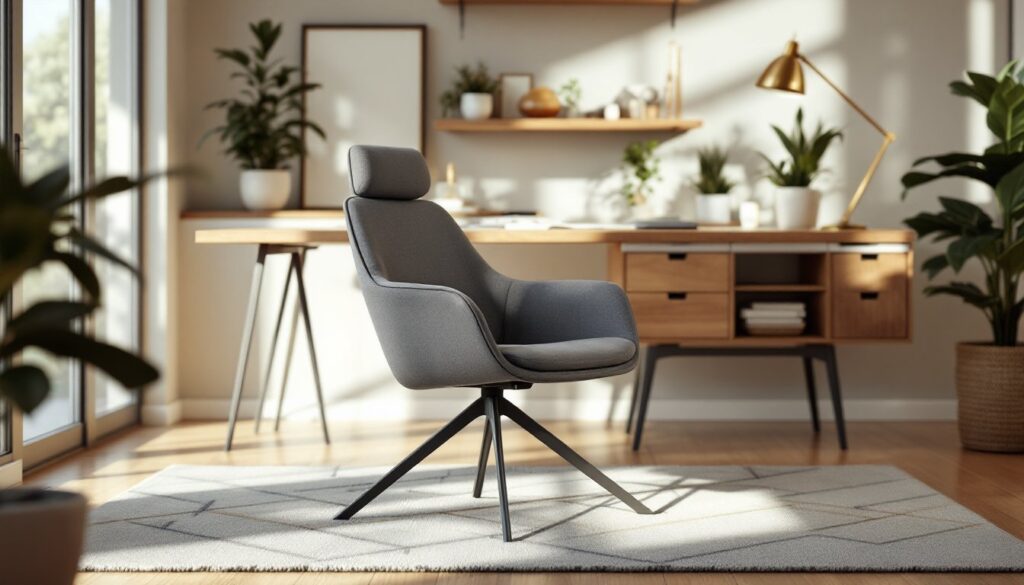
Invest in an adjustable office chair (task chair, not a dining chair). It should support your lower back, have adjustable seat height, and allow your feet to rest flat on the floor with knees at a 90-degree angle. A used Herman Miller Aeron or quality Steelcase chair runs $300–600, but budget options like IKEA Markus or Amazon Basics models ($80–150) work fine if you monitor your posture. Avoid bar stools or benches for full-time desk work, they strain the lower back after a few hours.
Your desk should position your monitor at eye level when you sit up straight. If your monitor is too low, angle it upward slightly using a monitor stand (doubles as hidden storage underneath). Your keyboard and mouse should sit at elbow height, so your forearms remain roughly parallel to the floor. This prevents wrist strain and shoulder tension.
A document holder clipped to the side of your monitor keeps reference materials at eye level, eliminating constant neck-down glances. A footrest (especially useful if your desk is higher than standard) relieves pressure on your thighs and lower back.
In a modern home office setup, small touches matter: a wrist rest for your keyboard, a mouse pad with arm support, or a lumbar cushion for additional back support. These cost $15–40 each but compound into real comfort gains during long sessions. Your future self, and your back, will thank you for prioritizing ergonomics over a trendy but uncomfortable aesthetic.