Your home office chair shouldn’t whisper an apology every time someone walks past your workspace. For years, office chairs meant bland black ergonomic pods that looked like they belonged in a corporate cubicle farm, not a thoughtfully decorated room at home. But today’s accent office chairs flip that script entirely. These pieces deliver real comfort and support while adding visual personality, whether you’re into mid-century modern, contemporary minimalism, or something boldly colorful. They’re not just functional seating: they’re design statements that transform how your workspace feels and functions. If you’re building or upgrading a home office in 2026, an accent chair is one smart investment worth exploring.
Table of Contents
ToggleKey Takeaways
- An accent office chair bridges comfort and style by combining proper ergonomic support with visual appeal, transforming your workspace into a design-intentional environment.
- Quality accent office chairs feature high-density foam (2.5–3 inches), reinforced wooden frames, and durable upholstery, while budget options cut corners and wear visibly within months.
- Choose accent office chair designs based on your personal style—modern minimalism, mid-century curves, or bold color—and measure your space to ensure the piece occupies no more than 15–20% of visual space.
- Test ergonomics in person by sitting for at least five minutes and checking that your feet rest flat with knees at 90 degrees and lower spine support is comfortable.
- Shop strategically during January and August clearance sales, evaluate secondhand options for authentic vintage pieces, and prioritize adjustability and warranty coverage (5–10 years) over trendy extras.
- Select materials based on your lifestyle: microfiber or performance fabric for households with pets, leather for easy maintenance and character, or mesh for breathability.
What Makes an Accent Office Chair Different
An accent office chair bridges the gap between traditional task seating and statement furniture. Unlike generic office chairs designed for purely utilitarian purposes, accent chairs prioritize visual appeal alongside ergonomic function. That means you’re getting proper lumbar support, adjustable height, and durable construction, but wrapped in materials, colors, and designs that actually complement your room instead of clashing with it.
The key difference lies in intention. Standard office chairs aim for invisibility: they’re supposed to fade into the background. An accent office chair is meant to be noticed. It might feature upholstered fabric in jewel tones, metal legs in brushed gold, or a velvet finish in a neutral shade that still reads as intentional and curated. Construction-wise, you’ll still find 5-point bases with casters, tilt mechanisms, and pneumatic height adjustment, the mechanical backbone that keeps you comfortable during an 8-hour workday.
What separates budget accent chairs from quality pieces is material durability and build consistency. A well-made accent office chair uses high-density foam cushioning (typically 2.5 to 3 inches thick), reinforced wooden frames, and quality fabric or leather that resists pilling and fading. Cheaper options cut corners on foam density or use thin upholstery that wears visibly within months. When shopping, run your hand across the seat, quality fabric feels substantial, not thin or slippery. Press into the cushion: it should offer resistance and spring back promptly, not compress flat under moderate pressure.
Design Styles to Complement Your Home Office Décor
Modern and Contemporary Designs
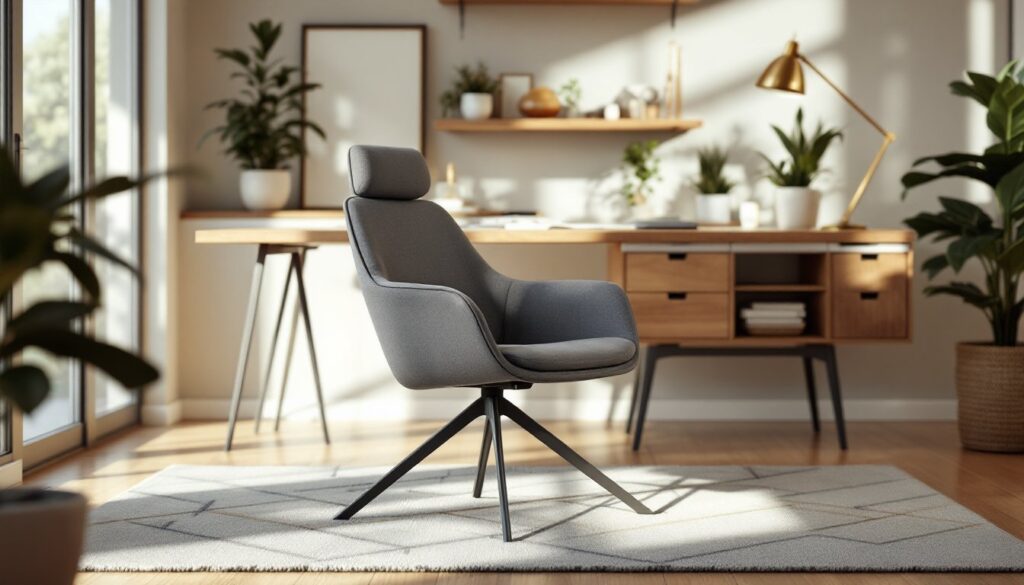
Modern accent office chairs emphasize clean lines, neutral color palettes, and often incorporate metal frames in chrome, brushed steel, or matte black. These designs work beautifully in minimalist offices where every piece earns its visual real estate. Look for chairs with tapered legs (straight, not curved), geometric upholstery patterns, or striking fabric choices in charcoal, soft gray, or white. Contemporary furniture trends favor, creating visual interest without clutter.
Contemporary styles also embrace bold color strategically. A deep forest green, burnt orange, or navy accent chair can anchor a neutral office and serve as the room’s visual focal point. This works especially well if your office doubles as a reception space or if you want to signal personality to video call participants. The trade-off: bolder colors show dust and require more frequent cleaning, so factor in your household’s maintenance tolerance.
Mid-Century and Retro Options
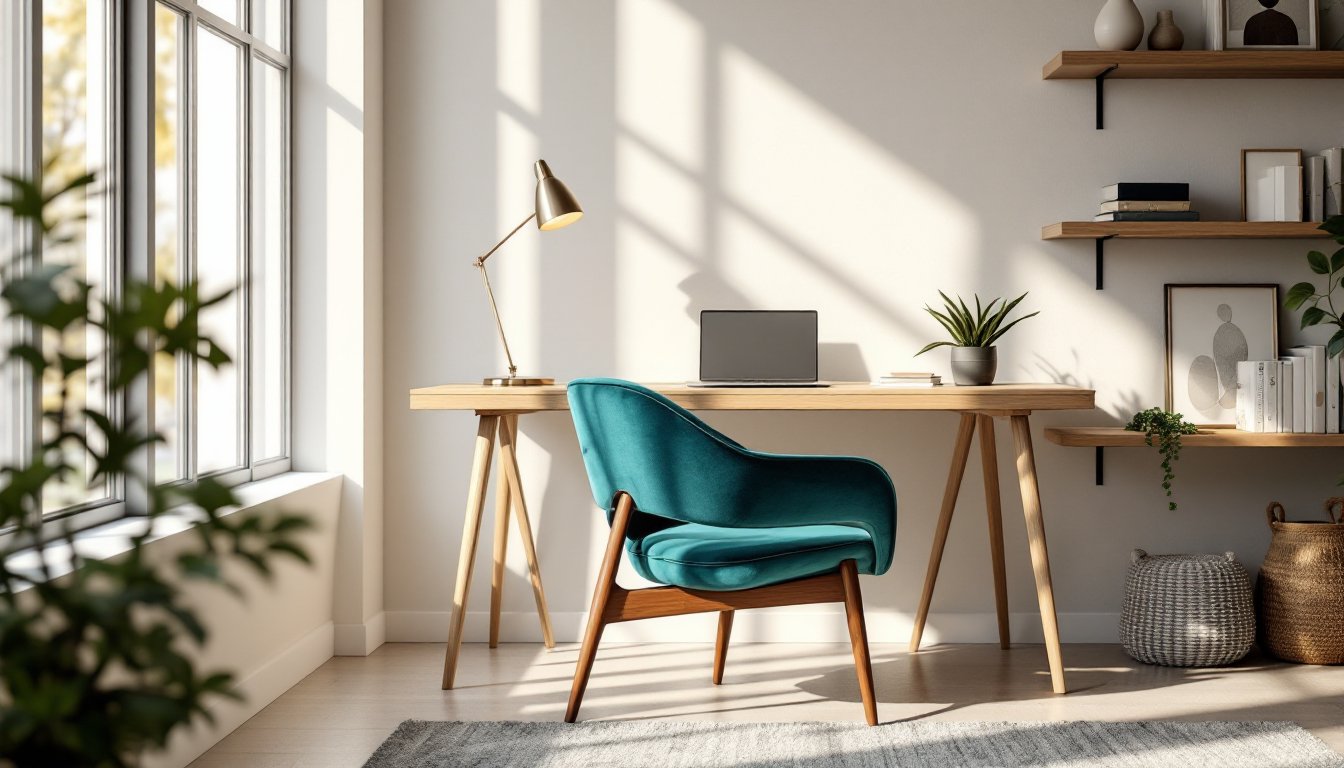
Mid-century modern remains wildly popular for home offices, and for good reason. Chairs styled after 1950s–1970s designs feature tapered wooden legs (often walnut or oak), curved seat backs that provide genuine ergonomic benefit, and upholstery in period-appropriate colors: mustard yellow, teal, burnt sienna, or rich chocolate brown. These chairs typically feel less “tech office” and more “thoughtful workspace,” which many remote workers prefer.
Retro designs offer approachability without pretension. A well-sourced vintage or vintage-inspired accent chair often costs less than contemporary high-design pieces, and the aesthetic integrates naturally into eclectic or maximalist offices. The catch: authentic vintage chairs may need reupholstering (a professional job costing $300–$800 depending on fabric and complexity), and supporting hardware like casters or height-adjustment mechanisms may not meet modern ergonomic standards. New reproductions sidestep these issues, though they cost more upfront than true vintage finds. Design professionals frequently recommend rather than chasing trends alone.
How to Choose the Right Accent Chair for Your Space
Before clicking “buy,” measure your actual office dimensions and sketch where the chair will sit. A bulky accent chair that dominates a small 100-square-foot office will feel cramped: the same chair in a spacious room becomes a comfortable anchor. As a rule, your accent chair should occupy no more than 15–20% of the room’s visual space unless it’s intentionally the dominant piece.
Test ergonomics in person if possible. Online reviews help, but everyone’s body is different. Sit in the chair for at least five minutes. Can you rest your feet flat on the floor with knees at roughly 90 degrees? Does the backrest support your lower spine comfortably? Adjust the height (if adjustable) and spin to confirm the base is stable and casters roll smoothly. Poor lumbar support will sabotage your work regardless of how beautiful the chair looks.
Consider material compatibility with your lifestyle. If you have pets or young kids, microfiber or performance fabric (treated for stain resistance) beats delicate upholstery. Leather develops character over time and wipes clean easily, but it’s pricier and can feel sticky in warm climates. Fabric holds dirt in pile but offers warmth and texture. Mesh breathes well but shows dust and requires occasional vacuuming.
Finally, think about color and pattern longevity. A trendy neon accent chair might feel dated in three years. Jewel tones, muted earth tones, and classic blacks and grays age better visually and are easier to integrate if your office décor evolves. If you want bold color, consider a removable slipcover instead, it offers flexibility and makes cleaning simpler.
Budget-Friendly Tips for Finding Quality Accent Office Chairs
Quality accent office chairs don’t require a five-figure investment, but price and value aren’t identical. A $300 chair isn’t inherently inferior to a $1,200 option: the gap often reflects brand reputation, warranty length, and material exclusivity rather than usability. Here’s how to spot actual value:
Shop end-of-season sales. Office furniture retailers typically clear inventory in January and August. Waiting a few months for a chair you love can save 20–40% without sacrificing quality. Sign up for newsletters from major retailers to catch flash sales and seasonal promotions.
Check secondhand options strategically. Office liquidation sales, estate sales, and even Facebook Marketplace offer genuine mid-century modern pieces and lightly used contemporary chairs at fraction of retail. Inspect for frame damage, test height adjustment, and assess upholstery condition. A solid wooden frame with good bones and minor cosmetic wear is worth reupholstering: deep frame cracks or broken mechanisms signal a skip.
Prioritize adjustability over extras. A chair with solid lumbar support, height adjustment, and a tilt function will serve you better long-term than one with flashy features like heated cushions that break within warranty. Focus on the fundamentals: comfort, durability, and design fit.
Compare warranty coverage. Better brands offer 5–10 year warranties covering frame and mechanism failure. Cheap chairs often come with 1-year coverage only. A longer warranty signals manufacturer confidence and protects your investment if mechanisms wear out.
Factor in shipping. Accent office chairs are heavy and awkward. Factor $100–$300 for white-glove delivery if ordering online, or check whether local retailers offer assembly and delivery bundles. A chair that costs $400 online might run $450 locally after shipping, but you’ll avoid damage risk and have immediate recourse if something arrives broken. Luxury furniture retailers often emphasize quality materials and construction, which translates to better long-term value even at higher price points.
Conclusion
An accent office chair is one of the smartest small investments you can make in a home workspace. It combines genuine ergonomic function with visual personality, transforming how the room feels during work hours. Whether you lean toward sleek contemporary designs, classic mid-century shapes, or bold color, prioritize comfort fundamentals, adjustability, foam density, and frame stability, over aesthetic trends alone. Measure your space, test ergonomics honestly, and don’t rush. The right accent chair will serve you well for years while making your office a place you actually enjoy spending time in.