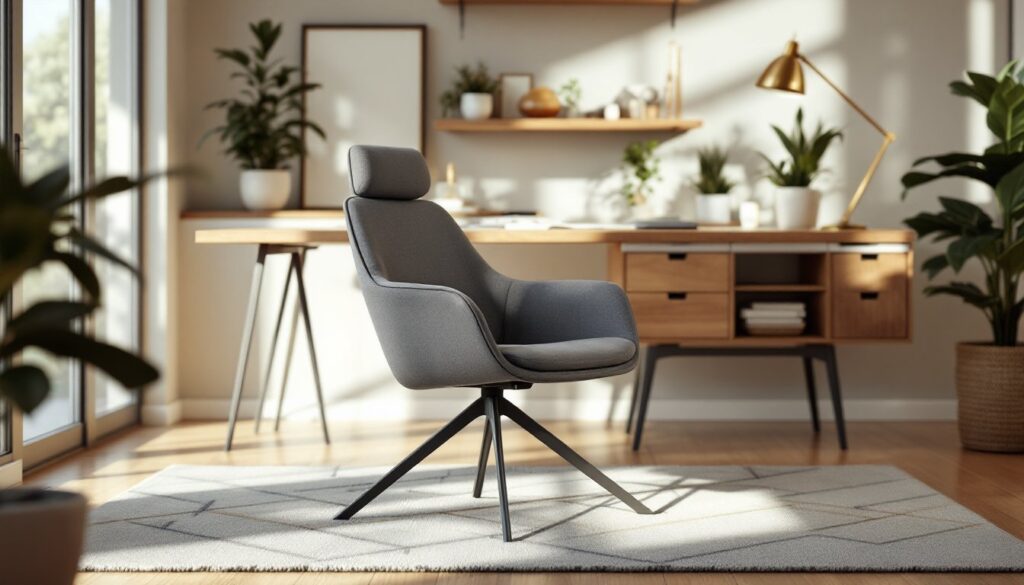
Finding the right office chair when you’re built bigger isn’t just about comfort, it’s about protecting your back, neck, and posture during those long workdays. Standard chairs don’t cut it. They sag under heavier weight, offer inadequate lumbar support, and break down faster. A quality big and tall leather office chair, designed with reinforced frames and substantial weight capacity, keeps you supported and looking professional. This guide walks through what makes a chair worth the investment, the features that actually matter, and how to find the perfect fit for your home office setup.
Table of Contents
ToggleKey Takeaways
- A big and tall leather office chair with reinforced frames and weight capacity of 300–500+ pounds protects your back, neck, and posture during long workdays better than standard chairs.
- Leather is superior to fabric for durability and hygiene—it wipes clean in seconds, resists sweat and stains, and improves with age while maintaining structural integrity around seams.
- Prioritize weight capacity verification, steel-reinforced bases, adjustable lumbar support, and a seat width of at least 21–22 inches to ensure proper ergonomic support and comfort.
- Measure your current chair setup and test new chairs for at least five minutes with feet flat and monitor at eye level to ensure knees are at 90 degrees and no pressure points exist.
- Condition your leather chair every 6–12 months with genuine leather conditioner, wipe spills immediately, and check hardware quarterly to maximize lifespan and maintain appearance.
- Plan room layout carefully—big and tall chairs require 28–32 inches of recline space and proper ventilation, so measure clear space behind your desk before purchasing.
Why Leather Office Chairs Are Ideal for Big and Tall Users
Leather takes a beating and comes back stronger. Unlike fabric, which absorbs sweat, oils, and stains, leather wipes clean in seconds and actually improves with age. For someone spending eight hours a day in a chair, that durability and hygiene matter.
More importantly, quality leather stretches to accommodate different body types and shifts comfortably without bunching. It breathes better than cheap polyurethane and holds its shape longer under consistent heavy use. The material also maintains structural integrity around seams and reinforced joints, critical when you’re putting serious weight on furniture.
Leather also signals durability. Most manufacturers reinforce leather big and tall chairs with thicker padding, steel-reinforced bases, and wider seats (often 22 to 26 inches) compared to standard models. You’re not just getting a pretty material: you’re getting a chair engineered to handle the stress. A leather chair built for your frame will outlast a flimsy fabric alternative by years.
Key Features to Look for in a Big and Tall Leather Office Chair
Weight Capacity and Durability
First thing: check the weight limit. Don’t estimate, know the number. Most standard office chairs max out at 250 to 275 pounds. Big and tall models start at 300 pounds and go up to 500 pounds or more. Exceeding a chair’s rated capacity kills the cushioning, stresses the base, and voids warranties.
Durability also comes down to frame construction. Look for steel bases (not plastic), heavy-duty five-star bases with a minimum 2.5-inch diameter, and reinforced backrest frames. The gas cylinder should be rated for your weight class, some manufacturers use higher-pressure cylinders for heavier users. Hardened leather and high-density foam (at least 2.2 pounds per cubic foot) resist compression and hold shape longer.
Ergonomic Design and Lumbar Support
A big and tall chair should offer adjustable lumbar support, not a vague foam bulge, but an actual adjustable mechanism that lets you dial in support right where your lower back curves. Your spine has natural S-curves: a chair that ignores them causes pain within hours.
Look for adjustable seat height (ideally 18 to 22 inches from the floor), adjustable armrests, and reclining capability with tilt lock. A wider seat depth (18 to 21 inches) prevents the edge from cutting into the back of your thighs. Seat width matters too, at least 21 to 22 inches ensures you’re not perched on the edge. Many big and tall office chairs now include synchronized tilt mechanisms that recline smoothly without sudden jerks. Headrests are less critical than backrest support, but if your chair includes one, it should be adjustable and padded, not a hard plastic shell.
How to Choose the Right Size and Fit for Your Home Office
Measure before you buy. Sit in your current chair and note the seat height, backrest height, and armrest position, what feels off? That’s your baseline. When testing a new chair (if you can visit a showroom), sit for at least five minutes with your feet flat and your monitor at eye level. Your knees should be at a 90-degree angle. Your back shouldn’t feel pressure points.
Consider your desk height too. If your desk is 30 inches (standard), your chair’s seat height should bring your elbows to roughly elbow-level when your arms rest on armrests. Too low, and you’ll hunch forward: too high, and your legs dangle.
Room dimensions matter as well. A big and tall chair occupies real estate, check its full recline length. Some chairs push back 28 to 32 inches when fully reclined. If your office is tight, measure the clear space behind your desk. Also verify the chair’s width: bigger isn’t always better for narrow doorways or tight spaces. Leather also requires room for air circulation, so ensure your office isn’t cramped or poorly ventilated. Consider browsing contemporary design solutions for thoughtful office layouts that accommodate larger furniture without feeling cluttered.
Maintenance Tips for Long-Lasting Leather Office Seating
Leather demands respect but rewards it. Condition your chair every 6 to 12 months with a genuine leather conditioner, not saddle soap or silicone sprays, which leave sticky residue. Use minimal product: a little goes a long way. This keeps leather supple and prevents cracking.
Wipe spills immediately with a soft, lint-free cloth. For stubborn marks, use a leather cleaner designed for office furniture (pH-balanced, never abrasive). Avoid direct sunlight, which fades and hardens leather over time. If your office gets afternoon sun, use blinds or position the chair away from windows.
Check hardware quarterly. Bolts loosen under the constant shift of sitting and reclining: tighten them gently with the appropriate wrench to avoid damaging finishing. Inspect the gas cylinder and wheels for wear. A cylinder that hisses or won’t hold height needs replacement (usually $30–80). Wheels wear faster on hard floors: consider casters made for carpet or hard surface depending on your setup.
For structural projects or custom upgrades to your workspace, reference detailed building and furniture repair guides for professional-level techniques. Store the chair away from extreme heat and humidity if you’re not using it long-term. Leather expands and contracts with temperature swings, stressing seams.
Conclusion
A big and tall leather office chair isn’t a luxury, it’s an investment in your spine, your productivity, and your comfort over thousands of hours. Prioritize weight capacity, reinforced construction, and adjustable ergonomic features. Test fit carefully and maintain the leather to maximize lifespan. Done right, your chair becomes nearly invisible, letting you focus on work instead of aching joints.