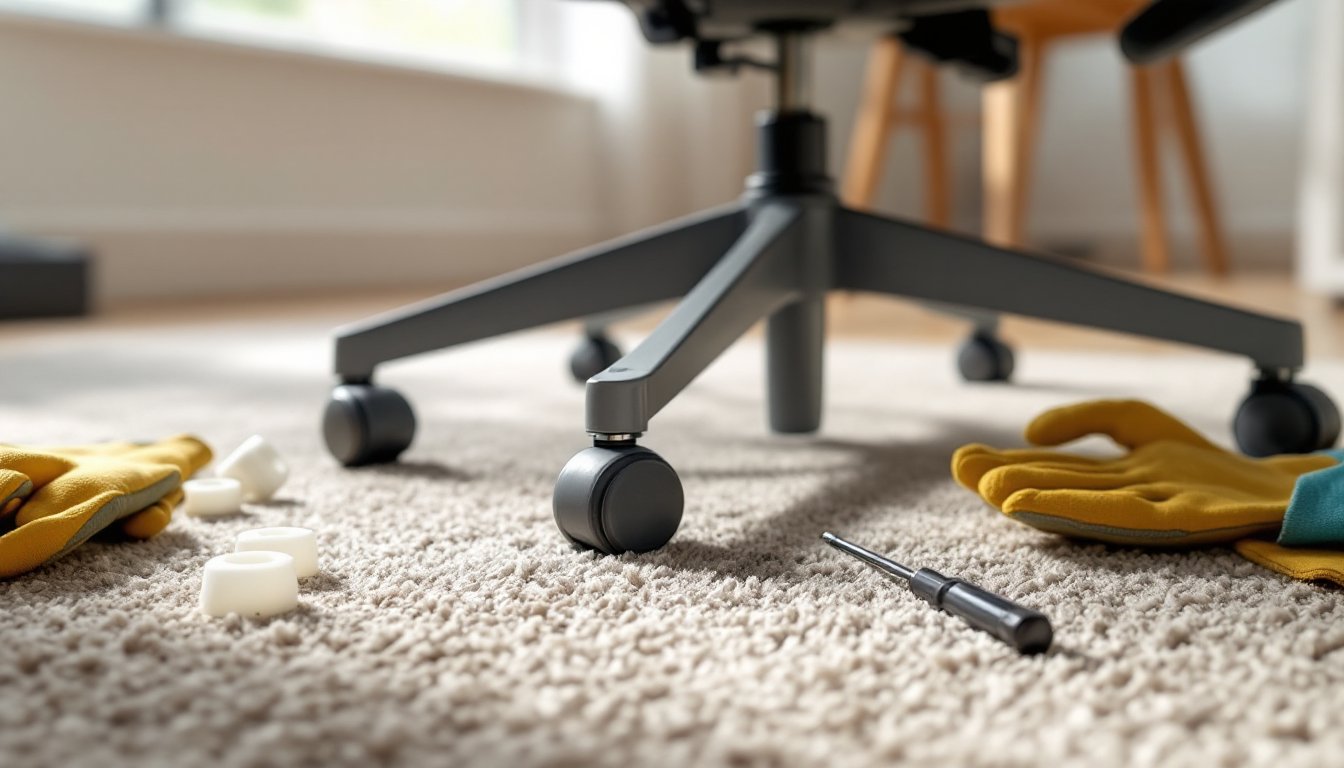
If your office chair barely budges on carpet, you’re not alone. Thousands of DIYers and home office workers deal with stiff, sluggish wheels that catch on fibers and resist rolling smoothly. The culprit? Standard hard wheels designed for hard floors don’t grip carpet well, they need the right size, material, and tread pattern to glide without sinking or binding. This guide walks through the specifics of carpet-compatible wheels, from wheel diameter and durometer ratings to replacement options you can install yourself. By the end, you’ll know exactly what to swap onto your chair for effortless mobility and comfort.
Table of Contents
ToggleKey Takeaways
- The best office chair wheels for carpet are soft polyurethane wheels rated 75-85 Shore A, which grip fibers and roll smoothly without damaging carpet.
- Wheel size matters: choose 2.5 to 3-inch diameter wheels for standard to thick carpet, as larger wheels distribute weight over more fibers and reduce resistance.
- Hard plastic wheels (95+ Shore A) designed for hard floors cause friction, require excessive force, and create ergonomic strain on your shoulders, wrists, and back during prolonged use.
- Replacing office chair wheels is a DIY task taking only 10-15 minutes per wheel and typically costs $25-$60 for a quality set, requiring just a screwdriver and pliers.
- Grooved or textured tread patterns on carpet-specific wheels provide better grip during lateral pushing and prevent visible track marks or indentations on your carpet.
- Twin-wheel casters (two smaller wheels per axle) offer an advanced option for high-pile carpet, distributing weight even further and lasting longer under heavy daily use.
Why Carpet Compatibility Matters for Office Chair Wheels
Carpet surface dynamics differ drastically from hard flooring. Hard wheels on carpet behave like a sled on rough sand, they stick, drag, and demand excessive force to roll. This isn’t just annoying: it’s ergonomically problematic. When rolling requires effort, you adjust your posture to compensate, creating strain on your shoulders, wrists, and lower back during an eight-hour workday.
Carpet fibers catch on wheel edges and create friction that hard-plastic casters can’t overcome. Soft-compound wheels, by contrast, conform slightly to the carpet surface and distribute pressure more evenly, reducing friction and allowing smoother motion. The right wheels also prevent divots and matting in your carpet that happens when hard wheels concentrate all weight on tiny contact points.
Beyond comfort, proper wheels protect your flooring investment. Cheap, rigid casters can damage carpet fibers and backing over months of daily use. Investing in carpet-specific wheels preserves both your chair‘s functionality and your floor’s appearance.
Understanding Wheel Sizes and Materials for Different Carpet Types
Office chair wheel sizes typically range from 2 to 3 inches in diameter. Smaller wheels (2 inches) suit thin, low-pile carpet: larger wheels (2.5 to 3 inches) handle thick, plush, or high-pile carpet better. The wider contact patch of a larger wheel distributes weight over more carpet fibers, reducing resistance.
Wheel material falls into two categories: durometer ratings (hardness scale from 0-100 Shore A) and compound type. Wheels rated 80-90 Shore A work well on most carpets, soft enough to conform but firm enough to maintain shape. Below 80 Shore A, wheels flatten and wear quickly: above 95 Shore A, they’re suited only for hard floors.
Polyurethane wheels outperform plastic or rubber on carpet because they offer grip without excessive drag. Polyurethane also resists dirt accumulation and outlasts cheaper materials by years. When shopping, verify the durometer rating and material, manufacturers don’t always list both prominently.
Soft vs. Hard Wheels: What Works Best on Carpet
Hard wheels (95+ Shore A, often plastic) excel on tile, laminate, and polished concrete but are a poor match for carpet. They provide zero grip on fibers and often leave visible tracks or indentations.
Soft wheels (70-85 Shore A, polyurethane or rubber compounds) are purpose-built for carpet. They grip fibers naturally, roll with minimal resistance, and conform to carpet pile without flattening it permanently. If you work on carpet more than 80% of the time, soft wheels are the clear choice.
Top Wheel Specifications to Look For When Shopping
When evaluating carpet-friendly wheels, prioritize these specifications:
- Diameter: 2.5 to 3 inches for standard carpet: 3 inches for thick, plush carpet.
- Durometer: 75-85 Shore A for balanced grip and durability.
- Material: Polyurethane (preferred) or high-grade rubber compounds: avoid generic plastic.
- Stem Type: Verify compatibility with your chair’s wheel axle, most use a 5/16-inch axle (nominal: actual is about 0.3 inches), but some specialty chairs differ.
- Load Rating: Ensure wheels support your chair’s intended weight, typically 250 to 300 pounds per wheel.
- Tread Pattern: Grooved or textured surfaces provide better grip on carpet than smooth wheels: they reduce slipping when pushing laterally.
Check your chair‘s documentation or measure the axle hole diameter before ordering. Stems come in standard and threaded varieties: threaded stems lock in place better on carpet where torque during starts and stops can loosen smooth stems.
Best Carpet-Friendly Office Chair Wheels and Options
Quality aftermarket wheels significantly outperform OEM (original equipment manufacturer) options because most chairs ship with hard plastic wheels optimized for cost, not performance.
Polyurethane soft-wheel sets are the industry standard. Brands offering 75-85 Shore A polyurethane wheels in 2.5-inch to 3-inch diameters typically run $25 to $60 per set of five. These are direct replacements for standard office chairs and install in minutes. Look for sets with swivel and smooth-rolling stem designs to maximize mobility.
Another solid choice is twin-wheel casters (two smaller wheels per axle instead of one). These distribute weight even further, reducing carpet depression and improving grip. They’re especially useful on high-pile carpet. Twin-wheel sets cost slightly more ($35 to $75) but last longer under heavy use.
If your office chair is an expensive ergonomic model or you work on mixed flooring (carpet and hard floors), dual-mode wheels exist, harder compounds with grooved treads that perform acceptably on both surfaces. They’re a compromise: they won’t roll as smoothly on carpet as soft wheels, but they reduce noise on hard floors compared to soft polyurethane.
Ford or online retailers often stock Popular Mechanics recommended caster selections that balance cost and performance. Read customer reviews specifically mentioning carpet use, that’s your best real-world reference.
How to Replace or Upgrade Your Current Office Chair Wheels
Replacing office chair wheels is a straightforward DIY task requiring no special tools beyond what’s in most drawers.
What You’ll Need:
- New wheel set (5 casters for standard chairs)
- Small flathead screwdriver or hex key (sometimes included)
- Pliers (if stems are stuck or rusted)
Steps:
- Flip the chair or elevate it. Ensure the base is accessible and stable. Wear gloves to protect your hands from sharp plastic or rough edges.
- Remove old wheels. Most stems slide or twist out, push or twist counterclockwise until the wheel separates from the axle. If stuck, grip the stem with pliers and apply steady, gentle pressure: don’t force it and damage the axle.
- Inspect the axle holes. Clean out any lint, carpet fibers, or debris before installing new wheels.
- Insert new wheels. Align the stem with the hole and push straight in until snug. Twist-lock stems should click into place: smooth stems should slide in smoothly with slight resistance.
- Test mobility. Place the chair on your carpet and test rolling in all directions. Wheels should glide without binding or sticking.
On most chairs, this task takes 10 to 15 minutes per wheel. If axles are damaged or stripped, the base may need professional repair or replacement, a rare issue unless wheels were forced out or the chair is very old.
Conclusion
Upgrading to carpet-specific wheels transforms your home office experience from frustrating to seamless. Soft 75-85 Shore A polyurethane wheels in 2.5 to 3-inch diameters are your best bet for smooth rolling, reduced fatigue, and longer carpet life. The investment, typically under $50, pays dividends in ergonomic comfort and daily usability. Replacement takes 15 minutes and requires no special skills.