Your office is probably missing something, and it’s growing in a pot. Indoor plants aren’t just decoration: they’re a proven way to boost productivity, reduce stress, and clean the air you’re breathing eight hours a day. Whether you’re working from home, in a cubicle, or managing an open floor plan, the right plants transform a sterile workspace into a living environment that actually works for you. In 2026, the trend isn’t about fussy orchids or finicky ferns, it’s about zero-guilt greenery that thrives on neglect and doesn’t demand a degree in botany to keep alive. Let’s dig into the plants that work, the ones that actually survive, and how to keep them thriving without losing your mind.
Table of Contents
ToggleKey Takeaways
- The best plants for an office are low-maintenance species like snake plant and pothos that thrive in low light and neglect, making them ideal for cubicles and fluorescent-lit workspaces.
- Office plants boost productivity by up to 15%, reduce stress, and actively purify air by filtering toxins like formaldehyde and benzene from your breathing space.
- Peace lilies and spider plants excel at air purification while tolerating low-light conditions, and peace lilies even signal when they need water by visibly drooping.
- Small desk plants like succulents and compact parlor palms deliver the same air-cleaning and stress-reducing benefits without requiring much space, light, or frequent watering.
- The number-one mistake is overwatering; check that soil is dry an inch down before watering, use a pebble tray for passive humidity, and fertilize only twice yearly for best results.
Why Office Plants Matter for Your Workspace
The science is solid: plants improve indoor air quality by absorbing carbon dioxide and releasing oxygen, while filtering toxins like formaldehyde and benzene that hide in synthetic office furniture and cleaning products. More practically, they reduce stress and boost focus. Studies show employees working in spaces with plants report 15% higher productivity and take fewer sick days, that’s real money in performance, not just feel-good anecdotes.
Beyond the health angle, plants humanize a sterile environment. A bare desk under fluorescent lights feels like a box: add a green plant, and suddenly there’s life in the room. They also soften noise and create visual interest without screaming for attention like a motivational poster. The catch? Your office environment is hostile: low light, inconsistent watering, temperature swings, and often zero humidity. Pick the right plants, and they’ll thrive. Pick wrong, and you’re buying dead plants every month.
Low-Light Champions: Plants That Thrive Without Direct Sunlight
Most offices have terrible light, either fluorescent only or a single north-facing window. Your plants need to work with that, not against it. Low-light plants aren’t just surviving: they’re actually adapted to dim conditions and will stretch and weaken if placed in harsh direct sun.
Snake Plant and Pothos: The Neglect-Proof Duo
If you forget to water for two weeks, these plants won’t just survive, they’ll thrive. The snake plant (Sansevieria trifasciata) is nearly bulletproof: it tolerates low light, irregular watering, and the kind of neglect most office workers deploy. Its upright, architectural leaves look professional in a corner or on a filing cabinet, and it actively purifies air by absorbing nitrogen oxides. Water once a month, maybe less in winter, and it’s happy.
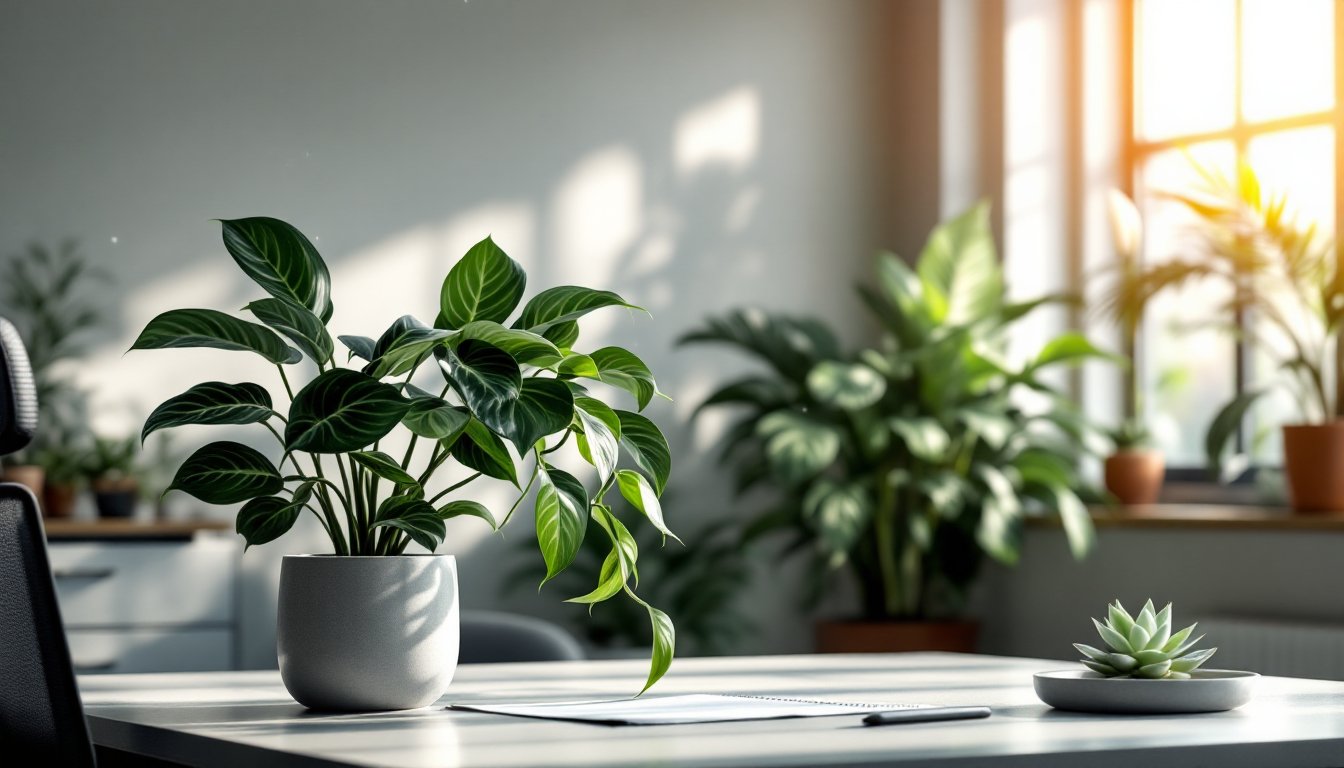
Pothos (Epipremnum aureum), also called devil’s ivy, is the trailing alternative. Hang it from a shelf, let it cascade, or train it up a trellis. It grows in low light and actually prefers indirect light, bright fluorescent overhead is fine. Pothos tolerates neglect and adapts to whatever water schedule you throw at it. Both plants are nearly impossible to kill, which is exactly what an office environment demands. Another solid pick is the ZZ plant (Zamioculcas zamiifolia), which handles low light and dry air with the same indifference. Its glossy, compound leaves stay clean-looking even under office dust.
Air-Purifying Plants That Clean Your Indoor Environment
If you’re breathing recycled air eight hours a day, your plants should earn their space by actually filtering it. The NASA Clean Air Study (yes, really) identified which houseplants remove volatile organic compounds like formaldehyde and benzene from indoor spaces.
The peace lily (Spathiphyllum wallisii) is the overachiever here: it purifies air, thrives in low light, and signals when it’s thirsty by dramatically drooping. Water it, and it perks up within hours, it’s almost interactive. Peace lilies produce small white flowers and add softness to a desk. Research suggests that selecting office plants requires, and peace lilies excel at both.
Spider plants (Chlorophytum comosum) are prolific air cleaners and nearly impossible to kill. They produce dangling babies (plantlets) that you can propagate or share, they’re the office plant equivalent of a friendship chain. They handle low light and bouncy watering schedules, though they prefer consistent moisture. For something more architectural, the dracaena family (including corn plant and dragon tree) filters multiple toxins and tolerates neglect. Dracaenas grow slowly in low light, so you won’t be constantly pruning them back, and they adapt to dry office air without sulking.
Small Desk Plants for Tight Spaces and Minimal Maintenance
Not everyone has corner real estate for a floor-standing plant. Small desk plants work in cube corners, filing cabinets, or shelves, they require less water, less light, and less guilt when you accidentally ignore them for three weeks.
Succulents like jade, aloe, and echeveria are practically immortal in office light. They store water in fleshy leaves, so they laugh at your inconsistent watering schedule. Give them bright (even artificial) light and let the soil dry completely between waterings. Avoid overly wet conditions, the number-one succulent killer is waterlogging. A pothos in a small pot works the same way as its larger sibling but requires less frequent watering and fits on a shelf without taking over.
The parlor palm (Chamaedorea elegans) is a compact, tropical option that adds genuine jungle energy without sprawling. It tolerates low light and dry air, though it prefers humidity. Mist it occasionally, and it stays vibrant. Another tidy option is the rubber plant (Ficus elastica), which grows upright and slow in office conditions, a single plant can stay under two feet tall for years. All these small-scale choices deliver the air-cleaning, stress-reducing benefits without demanding premium space or equipment. You’ll find comprehensive home improvement guides covering plant placement and care strategies that address common office setups and lighting challenges.
How to Care for Office Plants Without the Hassle
The biggest mistake DIYers make is overthinking care. Your office plants want to be ignored, overwatering kills more plants than neglect ever does. Stick your finger in the soil: if it feels dry an inch down, water. If it’s moist, walk away. Most office plants prefer to dry out slightly between waterings, especially low-light varieties.
Light depends on your office setup. North-facing windows and interior cubicles need truly low-light plants (snake plant, pothos, ZZ plant). Desks near south or west windows can handle medium-light plants like spider plant and peace lily. Fluorescent overhead light alone isn’t enough for most plants, so if your only light source is your ceiling fixture, stick with the shade-adapted options.
Humidity isn’t critical for most office plants, but dry air from heating or cooling can stress them. A simple pebble tray (a shallow saucer filled with pebbles and water, plant pot sitting on top) provides passive humidity without fuss. Rotate your plants a quarter-turn weekly if they’re near windows, it promotes even growth and prevents them from leaning toward light.
Fertilize sparingly: once in spring and once in summer with diluted houseplant fertilizer. Office conditions are typically lower-light and slower-growth, so plants need less feeding than outdoor counterparts. Most store-bought potting soil includes slow-release fertilizer anyway. If a plant shows yellowing leaves or stunted growth, check drainage first, soggy soil kills plants far faster than nutrient deficiency. Resources like The Spruce offer gardening guides and home decor strategies that cover troubleshooting common plant problems in detail.
Conclusion
Office plants aren’t a luxury, they’re a practical upgrade that costs pennies, takes minimal effort, and delivers measurable benefits. Start with a snake plant or pothos: they genuinely thrive on neglect and prove that greenery works in your space. Once you see results, add a peace lily or spider plant. The best plant is the one you’ll actually keep alive, so match species to your light and your watering habits, not to what looks good in magazine photos. Your office will be greener, your air cleaner, and your productivity genuinely higher.